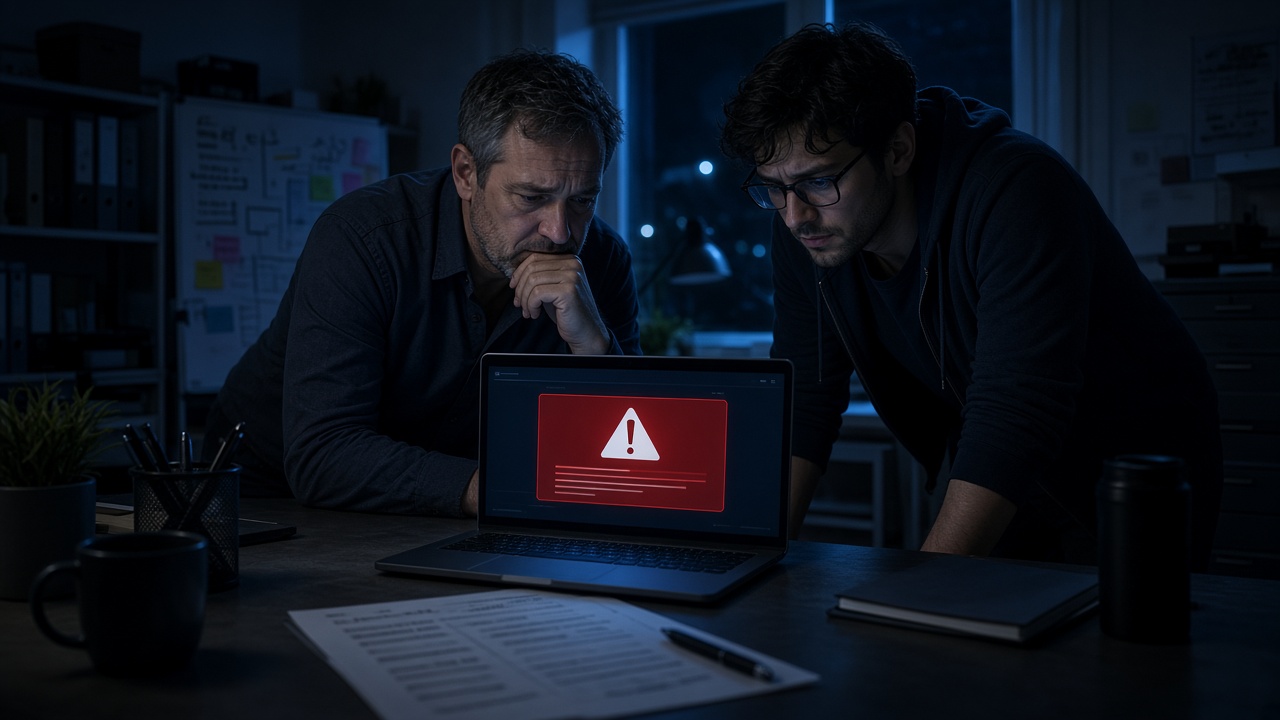
Almost every business owner I talk to in Murrieta and Temecula says the same thing when I ask about their incident response plan: “We have one.” Then I ask the follow-up: when was the last time you actually used it? That’s usually where the conversation goes quiet. A plan you’ve never tested isn’t really protecting you. It’s just giving you confidence you haven’t earned.
This topic came up in a recent episode of Bite Size Security, the podcast from NCX Group hosted by Mike Fitzpatrick. His point was simple, and I agree with it: most incident response plans fail because of people and communication, not because of technology. Below I’ll explain what that means for a small business or a busy household, and what you can do about it this week.
Picture it: 2 a.m. on a Saturday. Your bookkeeper’s laptop is showing a ransom note, and your shared drive is slowly turning into files nobody can open. In that moment, nobody goes looking for a 40-page binder. People do whatever they think is right, and that’s usually several different things at once.
After two decades of repairing and cleaning up computers in the Inland Empire, I see the same three failures over and over:
One of the strongest points in the NCX episode is that incident response is a financial issue. Every hour you’re down costs you payroll, lost sales, and goodwill. For a five-person dental office or a family-run contractor, a week offline can wipe out a quarter’s profit. Recent large vendor outages also showed that even businesses that were never hacked can stop cold when a provider they depend on goes down.
So I tell owners to treat their incident response plan the way they treat insurance or a fire exit. Decide on it ahead of time, make it simple, and practice it.

You don’t need an enterprise playbook. You need one page that anyone on your team can follow when they’re stressed. Here’s the template I give our clients:
Once a quarter, get your key people together for half an hour and walk through a scenario: “An employee clicked a fake invoice link and now the accounting PC is encrypted. What happens next?” Have each person say out loud what they would do. You’ll quickly find the gaps, like an outdated phone number, a password only one person knows, or a backup nobody can reach. Fix those gaps before an attacker finds them for you.
Families need a mini plan as well. Know how to freeze your credit, keep your bank’s fraud number handy, turn on two-factor authentication for email, and back up family photos to both the cloud and an external drive. If a pop-up says your computer is infected and tells you to call a number, don’t call it. That’s a scam. Shut the browser and call someone you trust.
If you’d like a second set of eyes on your plan, your backups, or your network, A. Computer Doctor helps small businesses and families across Murrieta, Temecula, Menifee, Wildomar, French Valley, and Canyon Lake. Call us at 951-595-7758 and we’ll help you get ready before something goes wrong at 2 a.m.
Credit: This article was inspired by the episode “Why Most Incident Response Plans Fail — And What to Do Instead” of Bite Size Security, hosted by Mike Fitzpatrick of NCX Group. Listen to more episodes at ncxgroup.com/podcast. The commentary above is our own.